

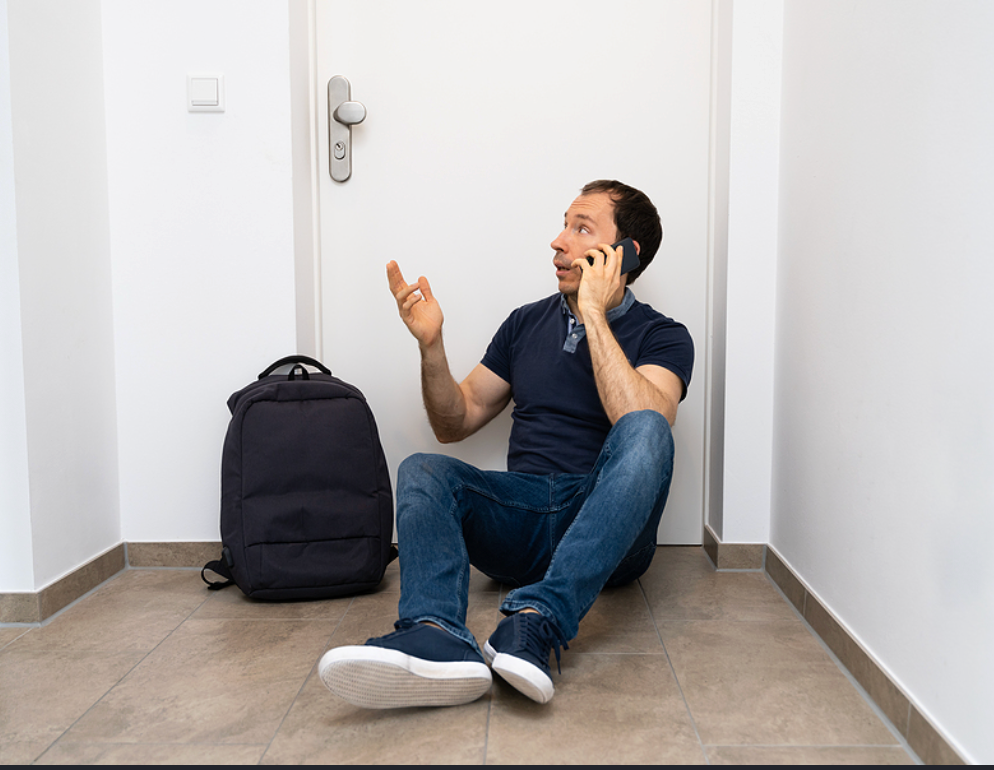
Forty feet. That is the gap between the router inside the main house and the keypad on a 500 square foot backyard casita, and it is where most of these calls start. The owner is renting the unit month to month for around nine hundred dollars, a new tenant is standing outside at ten at night, and the code texted an hour earlier does nothing at all. The lock gets blamed, the lock gets replaced, and six weeks later that same tenant is outside again, which is why honest access control installation san antonio tx work starts at the network instead of the door. A keypad on a detached unit is only as reliable as the link carrying codes to it. Here are the five mistakes that keep putting people out in the dark.
One Mesh Node On A Patio Is Not Coverage
The setup we see most often is a retail three-pack: two nodes in the house, the third one sitting on the patio table under the eave, aimed hopefully at the casita. The app shows a green dot, so everybody assumes the job is finished. That third node is backhauling over the same radio it uses to serve the lock, which means the stucco, the soffit and the metal patio cover all take their cut before a single code gets through. Signal that measures fine at noon in April is a different animal in a San Antonio August, with that node sitting at 140 degrees against a west-facing wall.
Coverage is not a dot on an app. It is a measured signal at the door, taken at the door, at the worst hour of the day. Anything softer than that is a guess, and the tenant is the one who pays for it.
Battery Locks Fail Quietly Long Before They Die
A battery keypad lock does not announce its decline. Voltage sags, the radio is the first thing to go, and the motor still throws the bolt when somebody turns the thumbturn by hand, so nothing looks broken. What actually happens is that the lock stops checking in reliably, and a code pushed from a phone lands nowhere. The low battery warning tends to show up in the app days after remote codes have already quit working.
Owners also badly overestimate how long those batteries hold. A Smart Lock Manufacturer survey of 2,400 smart lock owners, reported in January 2026, found WiFi-connected locks running 2.5 to 4 months in real use against advertised battery life of 6 to 12 months. Call it a fresh set of batteries every quarter on a WiFi lock. Honestly, on a west-facing casita door through a Texas summer, plan on ten weeks and keep a four-pack in the kitchen drawer.
Guest Codes Break When The Uplink Does
Here is the piece owners rarely connect. A code issued from a phone app is not handed to the lock directly; it goes up to the manufacturer’s cloud, back down to whatever bridge or hub sits on your network, and only then out to the door. Break any link in that chain and the code exists everywhere except the one place it matters. When the patio node drops its uplink for ninety seconds, the code entered at 9:40 can still be waiting in a queue at 10:15.
That is why the complaint is almost always intermittent, and why swapping hardware feels like it worked for about a week. A guest code is a network delivery, not a lock feature. Treat it that way and the whole troubleshooting order changes.
Detached Units Need Their Own Wired Backhaul
The permanent fix on a detached unit is boring: one buried Cat6 run from the house to the casita, terminated properly, feeding an access point mounted inside the unit rather than outside on a wall. Direct burial conduit, a real ground, and a path kept clear of the sprinkler valves. If the casita sits under about a hundred feet from the main structure and there is a trenchable route, run copper and stop fighting the radio. Above that distance, or across a driveway, a dedicated point-to-point wireless bridge on its own radio pair is the better answer, and it still beats a mesh node on a table by a wide margin. Either way the lock’s hub belongs inside the casita, on gear that is not also trying to stream a movie in the main house.
Owners resist the trench because it sounds expensive next to a hundred dollar mesh node. The trench gets dug once. The mesh node gets re-seated, re-paired and re-explained to a tenant every few months, usually at night, usually on a weekend.
Fix The Network First Then The Lock
Before anybody orders new hardware, get a real reading at the door: signal strength, packet loss across ten minutes, and whether the hub answers after the house router reboots. Nine times out of ten that test names which of these five mistakes you are living with. Competent access control installation san antonio tx crews check the path before they ever touch the door, because a lock hung on a bad link fails exactly the way the last one did. Fix the link, mount the access point indoors, put the hub on the wired side, then argue about which keypad you prefer.
A renter locked out after dark remembers it, and a month to month tenant does not need much of a reason to go looking at other listings. The lock is the cheapest component in that entire equation and the easiest thing to accuse. Spend the money on the path instead, and the door quietly stops being a topic of conversation.
