

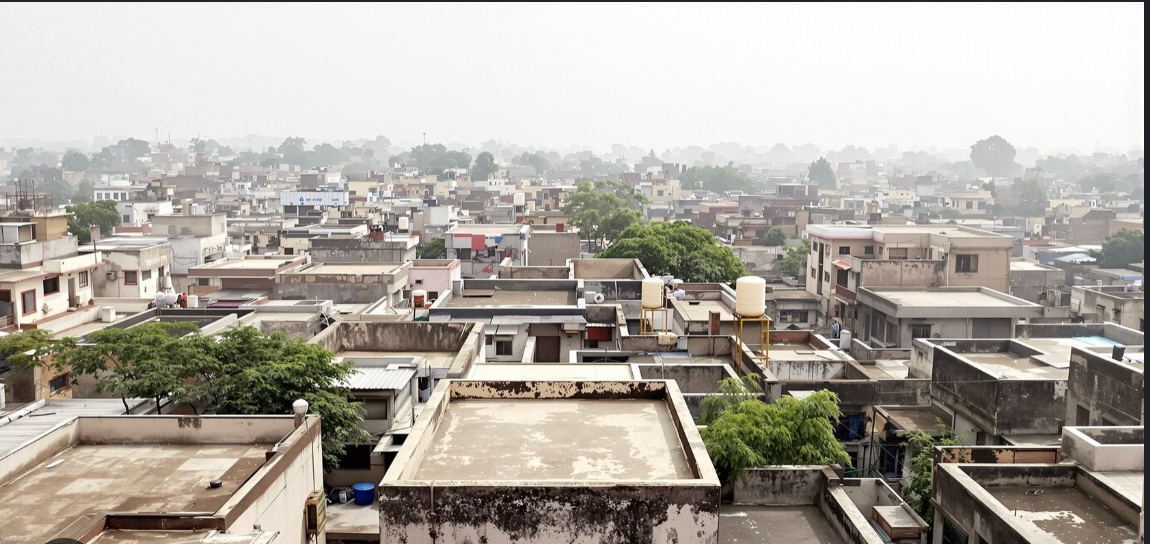
How much did the committee actually save the second time it voted to wait on the roof? I seconded that motion, and when fresh bids came back from the commercial roofers Ft Worth TX congregations tend to call first, the lowest of them sat above the figure our budget had been written around two years earlier. Waiting did not hold the price still. It moved a smaller job into a later year and made it a bigger one, and a board that sees that plainly can make a defensible decision this October instead of the October after.
The room I am describing is the volunteer version of a capital decision: a 12,000 square foot church campus in Tarrant County, a fiscal year that starts in October, and ten people with day jobs deciding what the buildings get. Our committee talked itself into two deferrals on the strength of three beliefs, every one of them reasonable in the moment. None of them held up. The third is the one that cost us the most.
The Belief That Deferral Is the Cheap Choice
A vote to defer feels free, because nothing leaves the account that night. The cost lands later and it lands larger, and the mechanism is not mysterious. Water that gets past a failed seam does not sit politely on the membrane; it soaks the insulation board underneath, tracks along the deck toward the low spots, and stays there through a Central Texas summer. In practice, what turns up when a crew finally opens a roof that has been patched for three seasons is wet insulation across a wider area than anyone on the committee expected, plus fasteners backing out of a deck that has been flexing under foot traffic. That is new scope. It was never on the first proposal, and it gets priced at today’s labor rates rather than the ones quoted the year the committee first said no.
On a campus like ours the arithmetic is easy to run and unpleasant to look at. Say the first proposal covered a new membrane over sound decking at roughly $9 a square foot, which on 12,000 feet works out near $108,000. Two deferrals later the same contractor is pricing tear-off of soaked insulation across perhaps a quarter of the field, deck repair in two bays, and a run of parapet flashing, which adds something in the neighborhood of $20,000 before anyone accounts for what materials did in the meantime. Those figures are an illustration rather than a quote. The shape of them matched what our own bids did, which is the part that stung.
None of that growth shows up in the way a volunteer budget gets built. A February 2026 compilation of nonprofit finance research reported that churches and similar nonprofits typically direct 15 to 25 percent of their annual operating budgets toward facilities and maintenance, while the capital reserve a roof replacement actually comes out of is the line most committees skip, because it reads as discretionary sitting next to payroll and the mortgage note. So the roof competes with the obligations nobody would dare defer, and it loses that comparison every single year until the ceiling tiles in the fellowship hall settle the argument. A deferred roof is not a postponed expense, it is a growing one. Ours had been living on patch jobs and good luck since 2021.
The Belief That Prices Will Come Back Down
Ten years ago a board could sit on a bid for a full year and expect the replacement number to hold within a few percent. Our own minutes from 2015 show exactly that, a quote carried forward twice with no revision at all. That is not how the last four years have gone. Every proposal our committee has opened since 2022 came back higher than the one before it for the same scope, and each contractor walked us through the same short list of reasons: membrane, insulation board, fasteners, freight, and crews who now have steady work booked out for months.
Waiting for a correction treats a step change as though it were a spike. Pricing may well flatten, and a couple of the estimators I have talked with believe it already has. Flat is not lower, though, and a board budgeting on the hope of lower is budgeting on something nobody in the room can promise it, the contractor included.
What a Board Can Decide This Fiscal Year
The third belief is the quietest of the three: that the committee needs another year of information before it can responsibly vote. What it usually needs is one document. An itemized proposal that names the system going on the roof, whether that is TPO, PVC, or a KEE membrane, breaks out tear-off and deck work as separate lines, distinguishes the workmanship warranty from the manufacturer warranty, and prices the whole job in language a treasurer can read aloud at a members meeting without hedging or apologizing.
That document is what a volunteer board can genuinely defend, and it is what we should have asked for in year one instead of year three. Get the inspection done, sit through the consultation, and ask the commercial roofers Ft Worth TX campuses like yours have already used to put the scope and the number in writing. Then vote on a real figure. A board that decides inside this fiscal year is choosing the smaller of two bills, and a board that waits again is only choosing which future committee has to stand up and explain the larger one.
