

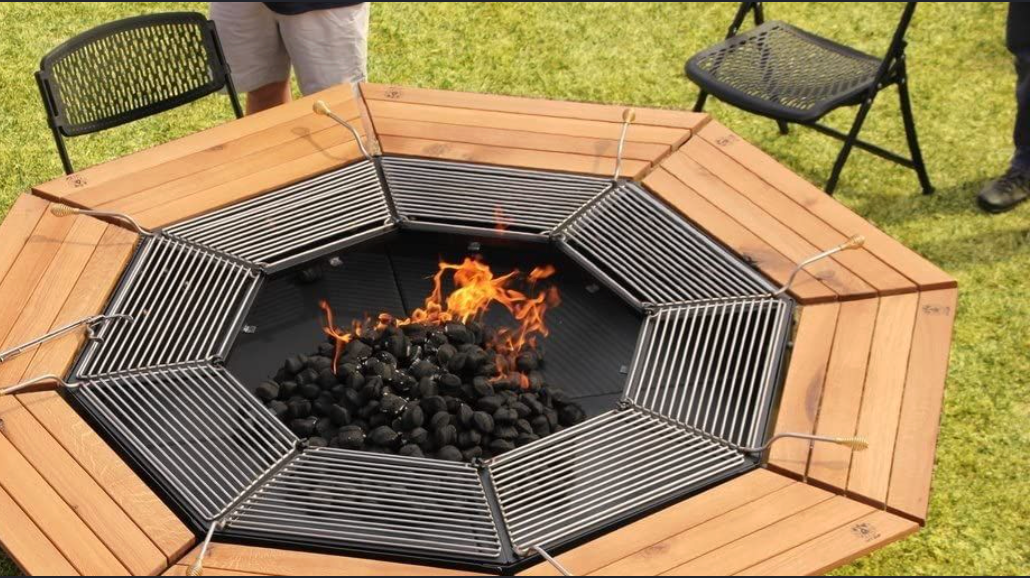
The Kellers put eleven people in their backyard for a graduation party last June and spent most of the evening walking. Their grill sat on a rolling cart at the edge of a half-acre Edina lot, tethered to the garage by an orange extension cord two guests tripped over. Nowhere to set a tray. By the third trip inside for tongs, the host had quit hosting and started waiting tables at his own party. That relay is what sends homeowners looking up outdoor kitchen builders edina mn in the first place, and the question they lead with is what a built cooking space really costs. The short version surprises people, because the stone is not where most of the money goes. A permanent build costs real money up front and it is still the better place to put it, since the bulk of that spend buys concrete and masonry nobody has to redo in five years.
Site Prep Sets The Price Before Stone Does
Before one piece of veneer gets set, somebody has to build the thing the veneer sits on. In Minnesota that means digging below the frost line for what masons call a frost footing, meaning a concrete leg poured deep enough that a February freeze cannot heave your countertop out of level. Then the compacted base, the slab, and drainage pitched away from the house. On a half-acre lot with decent equipment access, site work of that kind lands somewhere around $5,000 to $9,000 in an illustrative budget, before anyone gets to the fun parts. The job we get called back to most often is the one where a slab went down over topsoil to save a few hundred dollars, and by the third spring the mortar joints tell on it.
Utilities are the other line that gets underestimated. A gas stub, a dedicated GFCI circuit, and a water line each need a licensed trade and a permit, and each gets more expensive the farther the build sits from the house. Call 811 before any digging starts, every time, no exceptions. If the design tucks a propane cylinder inside a stone cabinet, that enclosure has to be vented at the base, because LP gas is heavier than air and will pool in a sealed box. Figure $2,000 to $4,500 for utility work on a reasonable run, and more when the meter sits on the opposite corner of the house.
Where Each Dollar Actually Lands
Take a build quoted at $28,000, near the middle of the $18,000 to $45,000 range these projects occupy, and the split is fairly predictable. Roughly a quarter of it disappears into site prep and the slab. Masonry and veneer take the largest single share, often a third or more, because that figure is mostly skilled hours rather than material. Countertops in granite or a dense quartzite run several thousand on their own, and the appliances, meaning the grill head, a side burner, and an under-counter refrigerator, can come to as much again. Compare two quotes from outdoor kitchen builders Edina MN homeowners tend to interview and you may find matching totals hiding very different assumptions about those last two categories.
What I cannot hand you is a clean resale number. Agents will tell you a built cooking space helps a listing in a market like this one, and I believe them, but nobody tracks cold-climate return on exterior masonry the way remodeling surveys track indoor kitchens, so any percentage quoted at you is a guess dressed up as data. The value I can defend is use. A cart gets rolled out, wiped down, and rolled back for eight summers running, while a stone island with real counter space beside it changes how often anyone bothers to eat outside at all.
Budget Questions Hosts Ask First
The same handful of questions comes up on nearly every first estimate visit, and almost none of them are about stone color. They are about money and sequence. These are the ones worth settling before a contract gets signed, because the answers change what gets poured in year one.
Can I Build It In Phases?
Yes, and phasing is the most common way a $40,000 vision gets built on a $20,000 budget. Pour the slab, run the gas and electrical, set the masonry base and one counter run in year one, then add the brick oven or the second run later. The one thing never to defer is anything buried, because reopening a finished patio to chase a gas line costs more than running that line early did.
How Does This Compare To The National Average?
It runs higher here, and footings are most of the reason. A January 2026 budgeting guide from the countertop fabricator JD Fabrications puts the national average for a custom outdoor kitchen at $13,000 to $17,000, with labor accounting for 30 to 50 percent of the total. A build carrying frost-depth footings and full-thickness stone sits above that national figure, which is why local quotes open closer to $18,000. The labor share holds true anywhere, though, and it is the part homeowners consistently guess low.
What Should I Refuse To Cut?
Footing depth and the countertop substrate. Nearly everything else has a cheaper honest version, whether that is cultured stone in place of full-thickness natural stone, a smaller grill head, or a seating wall that stops at six feet instead of twelve. Cutting structure to afford an appliance is how a build gets torn out at year six, and the second build costs more than doing it right did.
Spend Where The Build Cannot Be Redone
Sort the budget by what stays changeable. Appliances swap out in an afternoon, and a countertop can be replaced without disturbing what holds it up. Footings, drainage, and the buried gas and electrical are one-time decisions, so they get funded first even when that means the brick oven waits a season. The Kellers ran their utilities and set the island the first year, added the oven the next, and the extension cord went in the trash where it belonged. Retiring the cart is not really a purchase, it is a decision about where the permanent money goes.
