

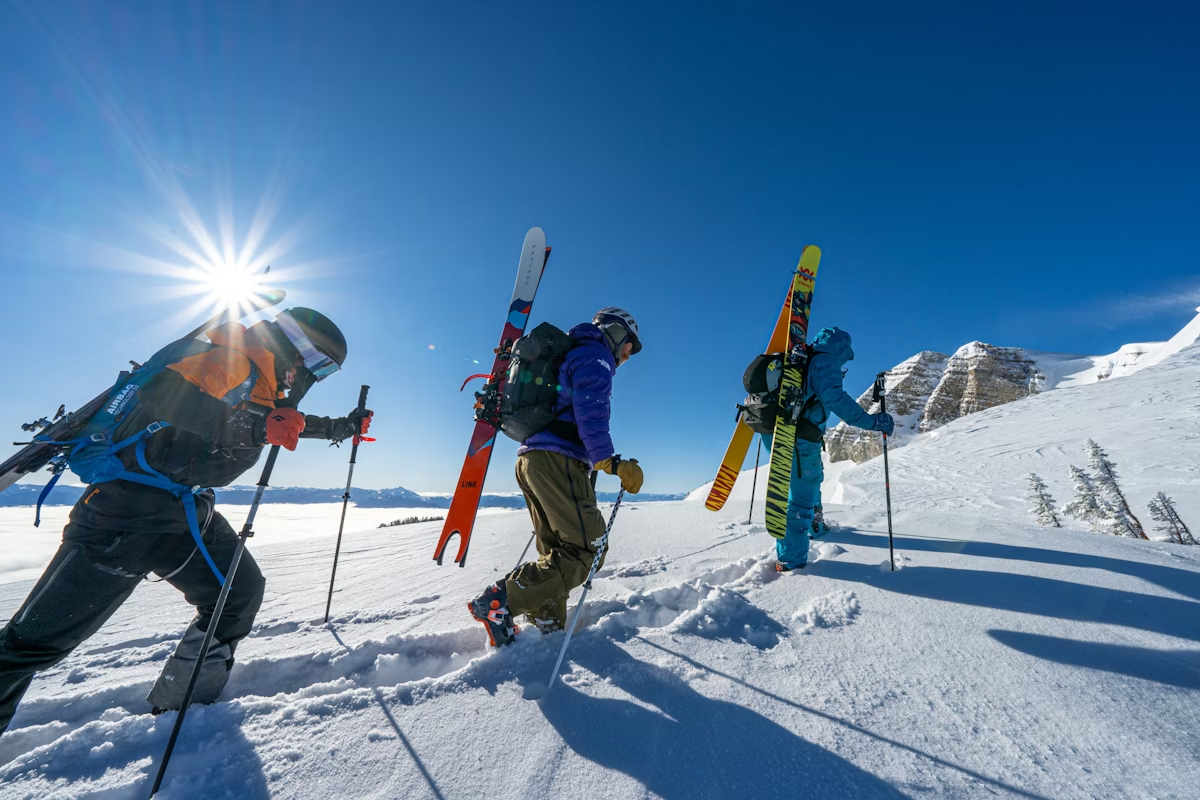
For riders looking for an alternative to groomed resort runs, backcountry snowboarding provides the ultimate freedom and ability to ride untracked powder. However, to travel out of bounds in the backcountry of Canada, proper gear, knowledge and mindset are essential. The most important component of any backcountry setup is your splitboard bindings.
A splitboard is a snowboard that can be separated into two individual ski-like planks for climbing, and then put back together to use like a standard snowboard for the descent. The bindings on your splitboard play an important role by serving as the critical link between you and your splitboard. The development of an efficient splitboard binding is critical to creating the best possible backcountry experience.
When choosing splitboard bindings, the first step is to determine what key element will determine how well your bindings and your splitboard’s attachment method (interface) will work together: whether your splitboard uses the puck system (most brands) or the channel system, so that you can ensure any binding selected will function properly with your splitboard prior to purchase.
Another important feature is the ease of transitioning between climb and ride modes. In the backcountry, the temperature can be quite cold; therefore, making transitions from ski mode to ride mode as quickly and easily as possible will help keep your fingers and toes warm and allow you to get back on your splitboard quickly. Be sure that you practice how to make these transitions before heading into the backcountry.
Backcountry safety equipment is very important no matter where you travel in this activity or sport. All backcountry participants should know how to use an avalanche transceiver, probe, and shovel and provide these safety tools. Wearing a helmet is a requirement too. In addition to carrying equipment, riders should also understand how to read avalanche terrain, recognize red flags such as recent snowfall or wind loading, and make informed decisions about when to turn back.
You should verify avalanche conditions through Avalanche Canada before going out and take an avalanche safety course as well. These courses provide essential training on rescue techniques, group communication, and hazard assessment, all of which are critical in minimizing risk when travelling in uncontrolled mountain environments.
Navigation skills, understanding weather conditions, and having an understanding of terrain management is also a must. For those looking to backcountry snowboard for the first time, it is highly suggested that you hire a certified mountain guide. Learning the basic skills to begin backcountry snowboarding is going to be a big time commitment, but if you have the correct gear and get the proper training, backcountry snowboarding in Canada is one of the most rewarding ways to enjoy the mountain.
