

You might not see them, but SSL certs work tirelessly behind the scenes every time you browse the web. They are the reason you feel safe entering your credit card number on Amazon or logging into your bank account from a coffee shop. In an era where data breaches make headlines weekly, these digital certificates act as the first line of defense between your personal information and cybercriminals.
But what exactly are they? Why does every website—from massive e-commerce platforms to personal blogs—need one?
This guide breaks down the world of SSL certs. We will explore how they function, why they are critical for building trust, and the different types available for various needs. By the end, you’ll understand why that little padlock icon in your browser bar is so much more than just a symbol.
What Are SSL Certs?
SSL stands for Secure Sockets Layer. At its most basic level, an SSL certs is a digital file that authenticates the identity of a website and encrypts information sent to the server using SSL technology.
Think of an SSL cert as a digital ID card or passport. When you travel, authorities check your passport to verify you are who you say you are. Similarly, when a browser (like Chrome or Safari) lands on a secure website, it checks the site’s “digital passport” to ensure it isn’t a fake site set up by hackers.
Once verified, the certificate enables an encrypted connection. This means any data transferred between you and the website—whether it’s a password, an email address, or a credit card number—is scrambled into an unreadable code. Only the intended recipient has the key to decipher it. Without SSL certs, this information travels as plain text, making it easy for attackers to intercept and steal.
How Do SSL Certs Work?
The technology behind SSL certs might sound complicated, but the process happens in a fraction of a second. This process is often called the “SSL Handshake.”
Here is a simplified look at what happens during that split-second handshake:
- The Attempt to Connect: Your browser attempts to connect to a website secured with SSL. It asks the website to identify itself.
- The Server Responds: The website’s server sends a copy of its SSL certificate to your browser.
- Authentication: Your browser checks the certificate. Is it unexpired? Is it from a trusted authority? If everything looks good, the browser trusts the site.
- Encryption Begins: The browser and server create a unique session key. They use this key to encrypt all data for the duration of your visit.
- Secure Session: You see the padlock icon and “HTTPS” in the URL bar. Your connection is now secure.
This seamless process ensures that even if a hacker manages to intercept the data stream, all they would see is a jumbled mess of characters that are impossible to decode without the private key.
Why Are SSL Certs So Important?
You might think SSL is only for banks or online stores, but that is a myth. Here is why SSL certs are non-negotiable for the modern web.
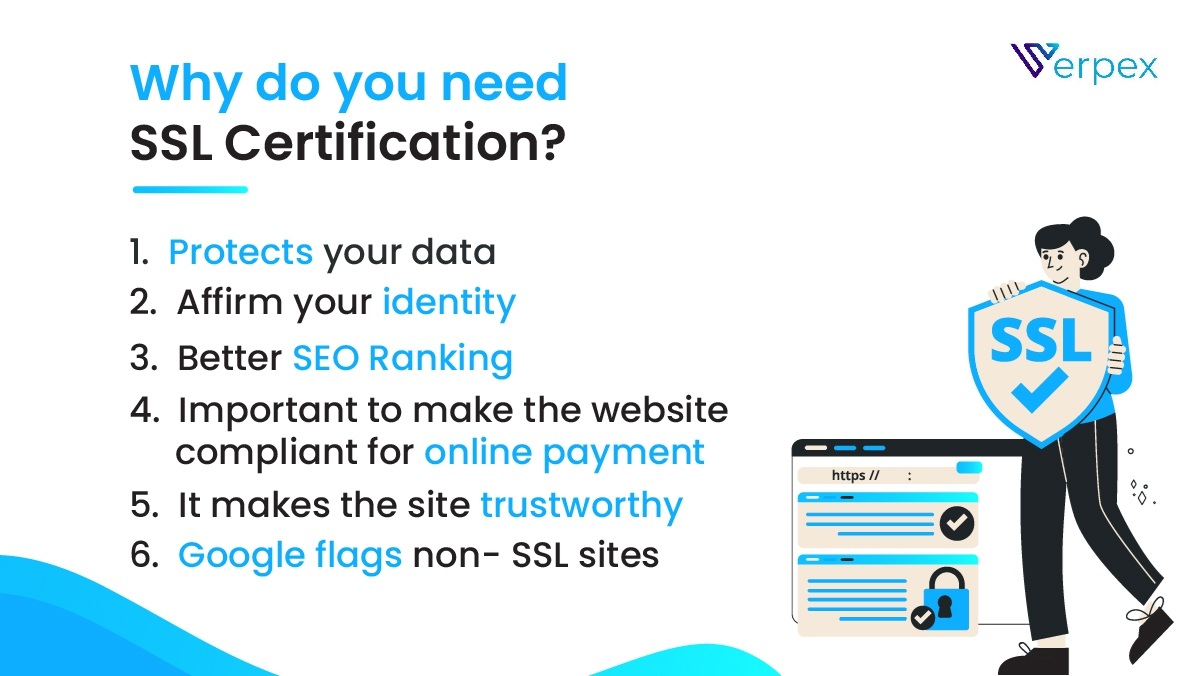
1. Protecting Sensitive Data
The primary job of an SSL cert is encryption. If you ask users to sign up for a newsletter, log in, or buy a product, you are handling their data. Encryption ensures that this data travels safely from point A to point B without being compromised.
2. Building User Trust
Internet users are savvy. They look for the padlock icon before sharing personal details. Browsers like Google Chrome now flag sites without SSL as “Not Secure.” Seeing a red warning sign next to your URL is a surefire way to scare off visitors. SSL certs signal to your audience that you value their privacy and have taken steps to protect them.
3. Boosting SEO Rankings
Google wants a safer internet. To encourage this, they use HTTPS as a ranking signal. Websites with valid SSL certs often rank higher in search results than similar sites without them. If you care about Search Engine Optimization (SEO) and organic traffic, getting certified is an easy win.
The Different Types of SSL Certs
Not all websites have the same security needs. Consequently, Certificate Authorities (CAs) issue different types of certificates.
Domain Validated (DV) Certificates
These are the most basic and affordable options. The CA simply verifies that you own the domain name. The process is automated and fast. DV certs are perfect for blogs, personal portfolios, or informational sites that don’t collect payments or sensitive data.
Organization Validated (OV) Certificates
For an OV certificate, the CA does a bit more digging. They verify that your organization is a legitimate business entity. This involves checking your business name, location, and registration. These certs provide a higher level of trust and are suitable for public-facing business websites.
Extended Validation (EV) Certificates
These are the gold standard for trust. To get an EV cert, a company must undergo a rigorous vetting process. The CA checks the legal, physical, and operational existence of the entity. While browsers no longer display the “green bar” with the company name, the certificate details still carry the highest level of authentication. These are ideal for banks, financial institutions, and large e-commerce platforms where trust is paramount.
Conclusion
The internet is built on connections, and those connections must be secure. SSL certs are the foundation of that security. They do more than just scramble data; they validate identity, foster trust, and even help your content get found on search engines.
Whether you run a small hobby blog or a multinational enterprise, securing your site with an SSL certificate is no longer an optional upgrade—it is a standard requirement. It shows your visitors that you respect their safety and take your digital presence seriously.
